What fear tends to mean in a dream
Fear is the most common dream emotion and the engine of most nightmares. What matters is what you feared and how you responded: the threat is often a waking pressure in costume, and turning to face it in a dream tends to change the dream.
Fear is the emotion people remember dreams by. Ask someone what they dreamed last night and, if they remember anything at all, it is usually the night something chased them, the night the floor gave way, the night a familiar face turned into something else. That is not an accident of memory. Fear is the one feeling the sleeping brain is unwilling to let you forget, and a dream that frightens you is a dream that has made very sure you will be thinking about it in the morning.
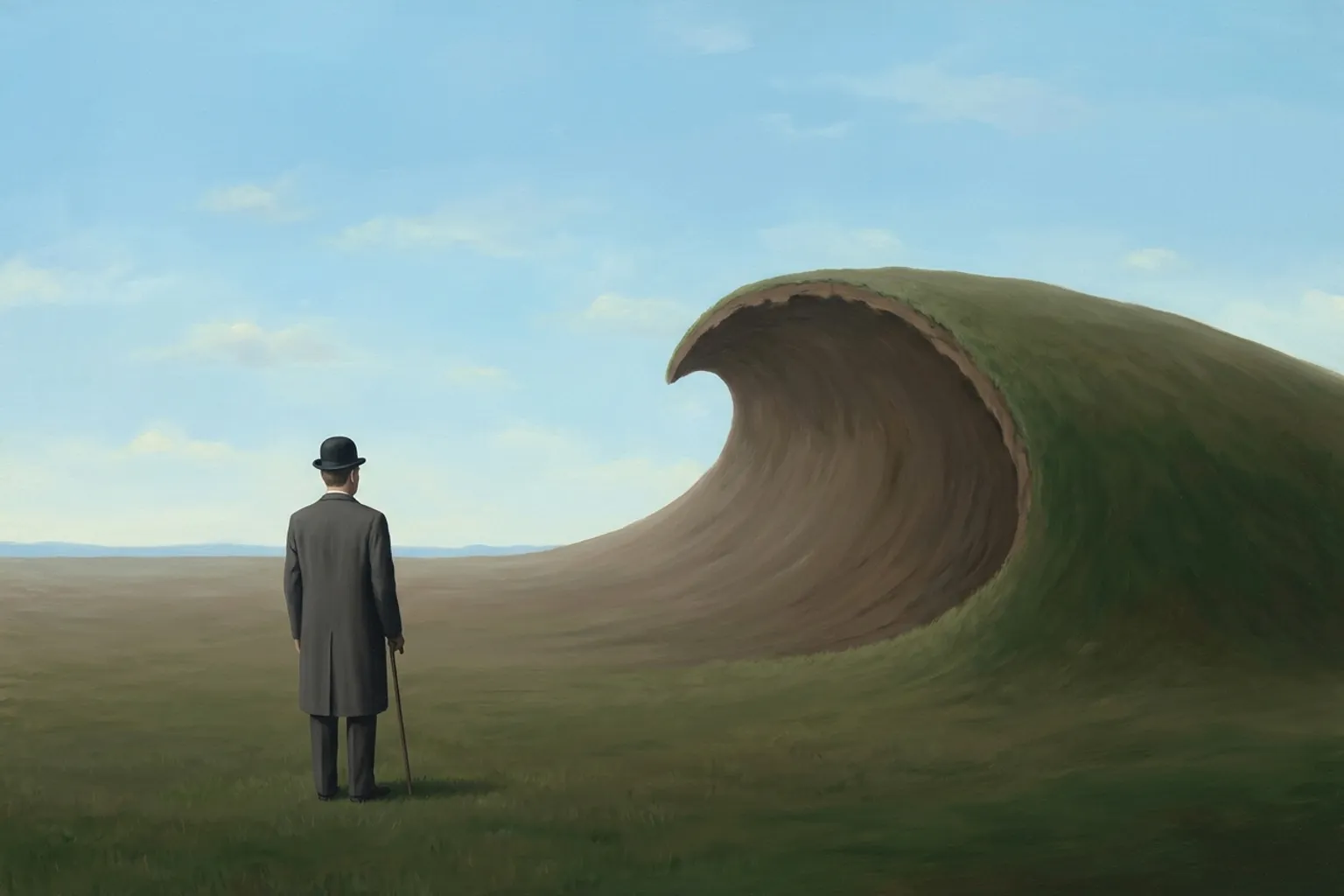
In the Jungian reading, fear in a dream rarely points at the thing that appears to cause it. The snake, the intruder, the dark water are carriers. What they carry is some part of your own life, or your own nature, that the waking mind has been keeping at arm's length: an instinct you distrust, a change you have been refusing, a quality you would rather not own. Jung called this material the shadow, and he was clear that the shadow is not evil, only unlived. It shows up in dreams wearing a frightening face because that is the only way to get your attention.
This is why fear dreams so often repeat. The dream is not trying to torment you; it is trying to deliver something, and it will keep knocking in the same shape until the door opens. People who work with their recurring nightmares often find that the moment they turn and face the pursuer, in the dream or in a waking rehearsal of it, the chase ends and the figure changes into something ordinary, sometimes even helpful. The fear was the cost of not looking.
It helps to separate fear from its neighbours. Fear has an object: something specific is after you, or about to happen. Anxiety is fear without a clear object, a pressure in the air. Dread is fear that has slowed down and settled in. Panic is fear that has overflowed into the body. A dream will usually tell you which of these it is by how it is staged. A single hunter is fear; a city you cannot find your way out of is anxiety; a sky going slowly dark is dread. Naming the feeling precisely is half the interpretation.
A word of caution the dictionaries leave out: fear in a dream can be accurate. Sometimes the body is frightened of something the mind has rationalised away, and the dream is simply reporting it. A frightening dream about a relationship, a job or a person deserves the question, before any symbolism: is any part of me actually afraid of this? The answer is not always yes, but it is worth asking first.
Waking up scared from a dream you can't remember
The feeling survives the plot because emotion and narrative are stored differently; the amygdala keeps the fear long after the cortex has let go of the story. This is common and not a sign anything is wrong. What it does tell you is that the dream's emotional charge was high. Note the feeling, the time, and whatever fragment remains (a colour, a room, a sense of someone behind you), and over a few weeks you will often find the same fragments returning with more attached.
Being chased and never seeing what is chasing you
The unseen pursuer is the purest form of the shadow dream: something wants your attention and you have not yet turned around to find out what. The fact that it stays behind you is the point. Dreamers who manage to stop and look, or who practise doing so while awake, commonly report that the figure becomes specific and far less frightening, and that the dream stops recurring. Until then, notice where the chase happens and what you were doing before it began; the setting often names the waking area the fear belongs to.
Fear dreams about someone you love being hurt
These are among the most distressing dreams and among the least literal. A dream that harms a partner, a child or a parent is usually about your relationship to what they represent in your life (security, responsibility, the part of yourself you see in them) rather than a forecast. They cluster in periods of change: a move, a new baby, an illness in the family, a separation. If the dream repeats, look at what in your waking life feels suddenly fragile.
When the fear is about something that really happened
Dreams that replay a real frightening event, especially close to the event or with little distortion, are the mind's way of processing it, and in most cases they fade as the processing completes. Dreams of this kind that persist for months, wake you repeatedly, or make you avoid sleep are worth raising with a doctor or therapist; there are effective treatments for trauma-related nightmares, and a journal of when they occur and what triggers them is useful to bring along.
Questions to ask about this dream
The meaning lives in your dream, not on this page. Before reaching for an interpretation, look at how the feeling actually behaved:
- What, exactly, were you afraid of: a thing you could see, or a feeling that something was coming?
- Did you run, freeze, fight, or hide? Is that how you respond to fear when awake?
- Was anyone with you, and were they afraid too, or strangely calm?
- Did the fear peak and wake you, or did the dream resolve it somehow?
- Is there anything in your waking life right now that you have decided not to be afraid of?
- Have you had this dream before? What was happening in your life the last time?
How often does your sleep feel this way?
A page like this can only describe fear in general. What matters is your own pattern: how often the feeling comes, what it arrives with, and what was happening in your life on the nights it did. One dream is an anecdote. Thirty tagged dreams are a graph.
Lunar Log is a private, local-first dream journal that tags every dream with how it felt, from this same list of feelings, and charts them over months alongside the people, places and symbols they appear with. It's free on iOS and Android, and open on the web. Get the app.
New to this? Start with how to remember your dreams, or with keeping a dream journal you'll actually use. If a feeling keeps returning in the same dream, read about recurring dreams.