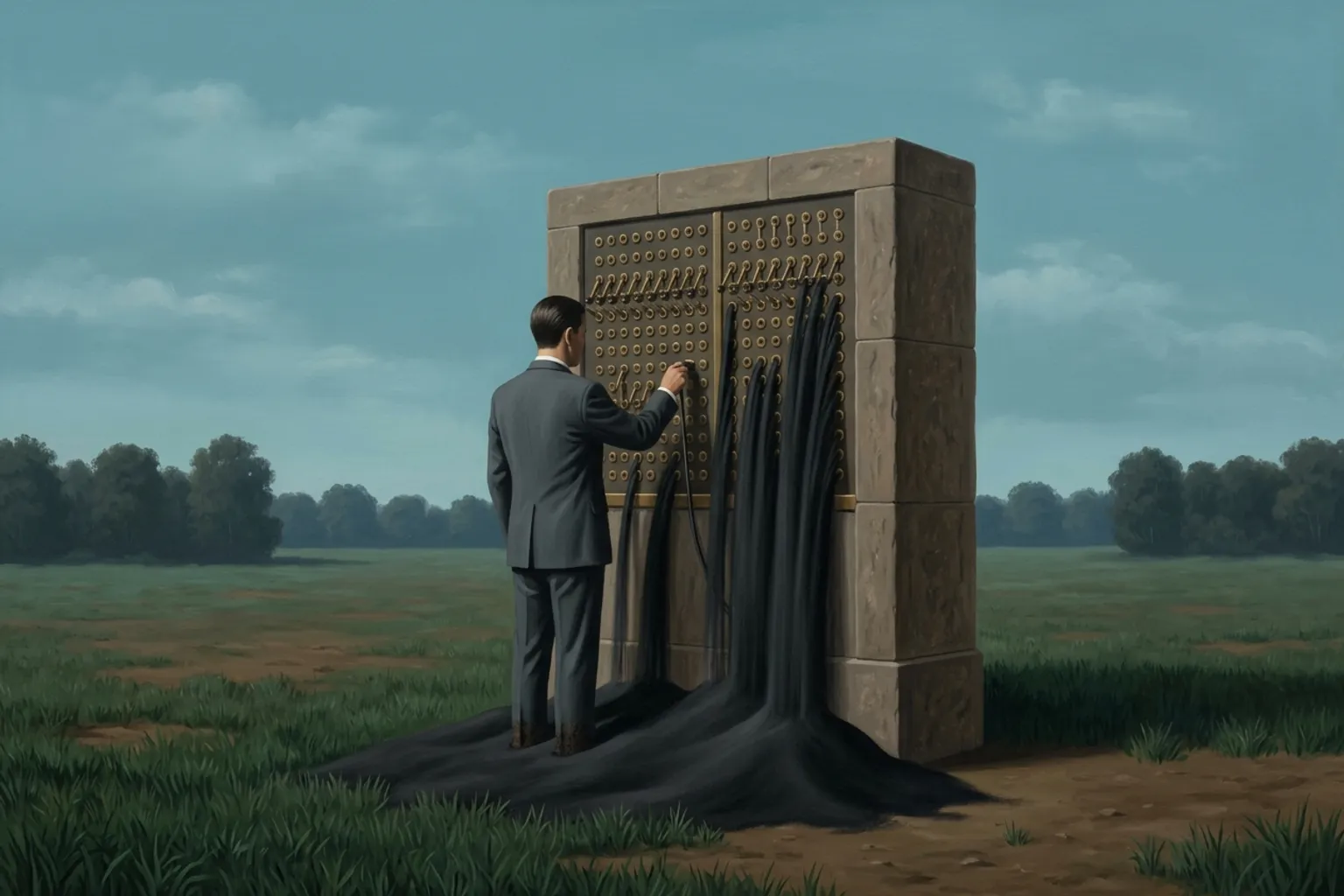
What panic tends to mean in a dream
Panic dreams — missing the exam, the phone that will not dial, the legs that will not run — often visit during overload. They are less about the scenario than about the feeling of not being able to cope, and tend to ease when waking load does.
Panic is fear that has overflowed into the body. Where dread waits, panic acts, and usually acts uselessly: the hands that will not work the lock, the legs that will not run, the voice that makes no sound. Panic dreams are the ones that end in waking, because the body's alarm gets so loud that sleep cannot hold it, and the dreamer arrives in the dark with a pounding heart and no clear idea what for.
The Jungian reading of panic is that the ego has met something it cannot contain. Fear can be worked with, dread can be waited out, but panic is the moment when the whole ordered self is overwhelmed at once. The dream stages this with sudden, total failures: the brakes, the elevator, the ground itself. Everything the dreamer relied on gives way in the same instant, and the feeling is not of a threat approaching but of the structure that would have met it collapsing.
Panic in dreams is closely tied to the body's real state. Sleep apnea, fever, alcohol, some medications and simple exhaustion all raise the odds of a panic dream, and so does going to bed with the heart already racing from the day. It is worth separating the dream's content from its physiology. A panic dream on a night of bad sleep after a hard week is the body speaking. The same dream on an ordinary night, three times in a month, is the psyche speaking.
The specific failure in a panic dream is its message. Brakes that fail speak of a life moving faster than the dreamer can stop. An elevator that plunges or jams speaks of a transition, between roles, between levels of life, that has gone out of control. Drowning is emotion arriving faster than it can be breathed through. Losing one's voice is the inability to call for help, and often marks a period when the dreamer has been carrying something alone.
Panic dreams are not, in most cases, a sign that something is wrong with you. They are a sign that something is too much, and the dream is doing what the day did not allow: registering it. The useful response is not to interpret the monster but to look at the load. What has recently become too much, too fast, or too heavy to hold?
Waking up in a panic in the middle of the night
Waking with a racing heart, sweat and a sense of catastrophe is common and has several possible sources. If it happens in the first hours of sleep, without a dream you can remember, it may be a night terror or a physical arousal rather than a nightmare, and it is worth mentioning to a doctor if it recurs. If it comes toward morning with a dream attached, the dream is the thing to write down, before the feeling erases it.
Panic dreams where you cannot move or call for help
Paralysis and a lost voice are the two most common panic mechanisms in dreams, and they describe a specific waking state: the sense of being unable to act or to be heard in a situation that demands both. Sleep paralysis, the physical version, is a separate and usually harmless phenomenon, but the dream version tends to arrive when the dreamer feels stuck between a demand and their capacity to meet it. Ask who, in waking life, you have not been able to reach.
Dreams of brakes failing or a vehicle out of control
The runaway vehicle is panic's signature image, and it belongs to lives that are moving faster than they are being steered: a career accelerating, a relationship rushing ahead, a schedule that no longer has room for the person keeping it. The dream is not predicting an accident. It is describing the speed. Ask what has accelerated recently, and whether the brakes you would use in waking life, rest, refusal, a conversation, still work.
Panic dreams during a stressful period
Panic dreams cluster in the weeks around exams, moves, illnesses, new babies and job changes, and they usually subside when the period does. During such a stretch, the dreams are a barometer rather than a diagnosis. Sleep, and the boundary between the day's work and the night, are what change them most. If they persist after the pressure lifts, or come with daytime panic, that is the point to seek help.
Questions to ask about this dream
The meaning lives in your dream, not on this page. Before reaching for an interpretation, look at how the feeling actually behaved:
- What failed first in the dream: your body, a machine, the ground, your voice?
- Did you wake before it resolved, and what did your body feel like when you did?
- Was anyone there who could have helped, and could you reach them?
- Was the dream sudden from the start, or did it build?
- What in waking life has recently become too fast, too much, or impossible to stop?
- How was your sleep, your health and your day before this dream?
How often does your sleep feel this way?
A page like this can only describe panic in general. What matters is your own pattern: how often the feeling comes, what it arrives with, and what was happening in your life on the nights it did. One dream is an anecdote. Thirty tagged dreams are a graph.
Lunar Log is a private, local-first dream journal that tags every dream with how it felt, from this same list of feelings, and charts them over months alongside the people, places and symbols they appear with. It's free on iOS and Android, and open on the web. Get the app.
New to this? Start with how to remember your dreams, or with keeping a dream journal you'll actually use. If a feeling keeps returning in the same dream, read about recurring dreams.