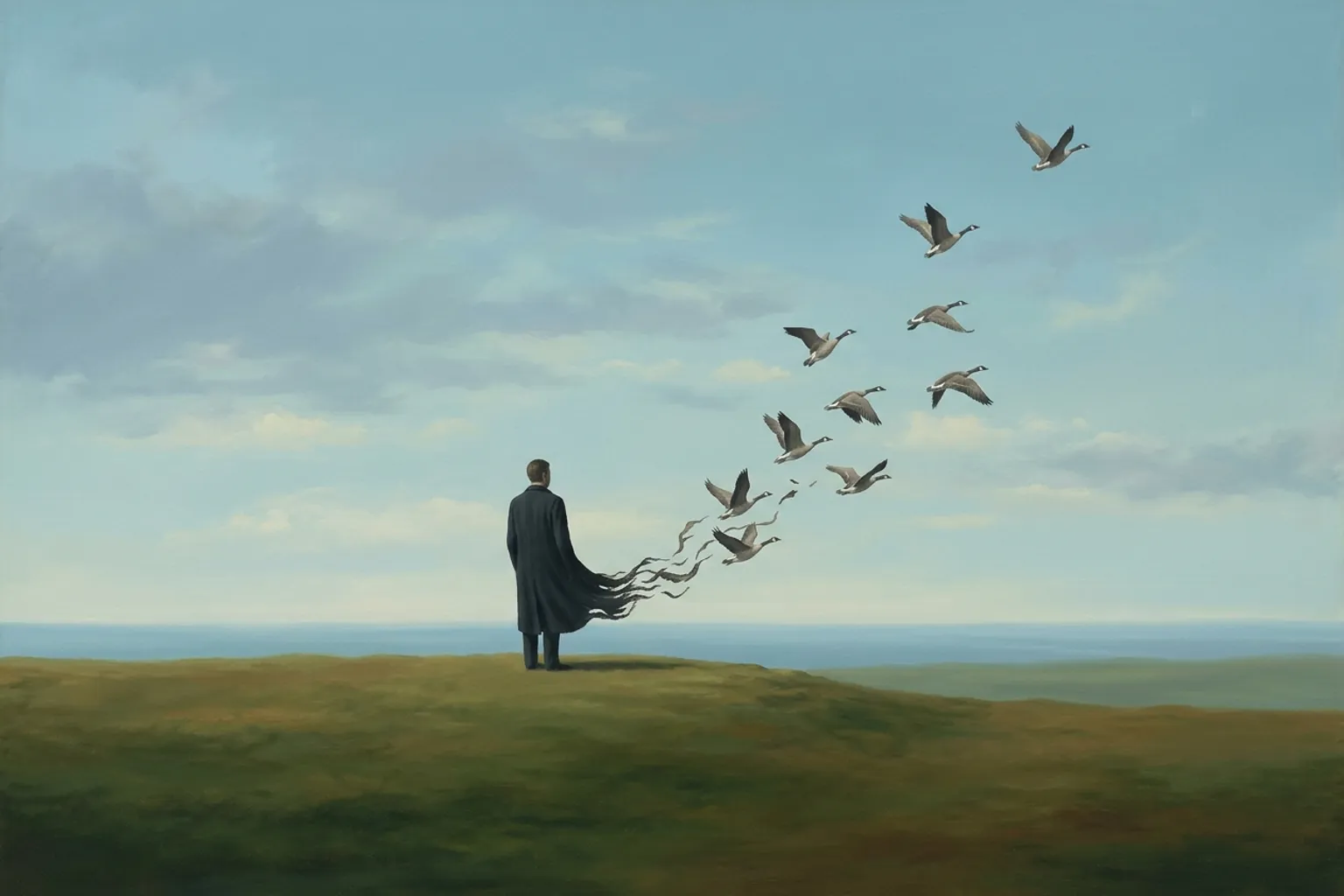
What freedom tends to mean in a dream
Freedom is the emotional signature of escape dreams: breaking out, flying, leaving a house. It often points to a real constraint you are ready to shed — a role, a relationship, a belief — or to the cost of one you are still carrying.
Freedom in a dream is a feeling with a shape: open space after a closed one. The dreamer breaks out, flies, leaves the house, drops the bag, walks out of the job, and the feeling is the air itself. These dreams are close to euphoria but more specific. Euphoria overflows; freedom is defined by the thing it is free from, and the thing is the interpretation.
In the Jungian reading, the freedom dream stages the shedding of a constraint the psyche has identified before the dreamer has. The house that is left is a role or a family pattern. The job walked out of is a persona, the mask worn for the world. The relationship escaped is a dependence. The body that flies is the self unweighted from circumstance. The dream is not always advising the exit. It is showing what the dreamer is carrying, by showing what it feels like to set it down.
Freedom dreams cluster when a constraint is nearing its end, and when it is not. In the first case they are anticipation: the psyche rehearsing the release before the divorce is final, the degree conferred, the child grown. In the second they are the cost of the constraint, made visible. A dreamer who is not going anywhere and dreams every week of escape is being told something about the price of staying.
How the freedom was gained matters. Breaking out, through effort or force, is the dreamer's own agency, and the dream is confirming they have it. Being released, a door opened by someone else, is freedom as permission, and the dreamer may be waiting for a permission they could grant themselves. Simply finding oneself free, the walls gone without explanation, is a wish, and wishes are informative too.
The question is what the dream freed you from, and what it would cost, and gain, to be free of it awake. The freedom dream is honest about the constraint and silent about the consequences. That silence is the dreamer's to fill.
Dreaming of breaking out or escaping
Prison, a locked room, a house that will not let you leave, and then the break: escape dreams stage a constraint and the dreamer's power over it. The place you escaped from is the role or situation the psyche has flagged; the manner of escape is your capacity. These dreams tend to come when a waking constraint has become intolerable and the dreamer has not yet admitted it. Name the prison. That is most of the work.
Dreaming of flying and feeling free
Flying freedom is release from weight, from the pull of circumstance itself. It is the most common form of the feeling and points at whatever the dreamer feels held down by: duty, debt, a body, a history. Unlike euphoric flight, which is about the joy, free flight is about what fell away. Ask what was under you, and what it would take to be that far above it for an afternoon.
Dreaming of leaving your job or your home
Walking out of the office, driving away from the house, and the lightness that follows: these dreams name a constraint precisely, and they arrive when the dreamer has been weighing an exit they have not spoken aloud. The dream is not the decision. It is the psyche's report on how the exit would feel, and it is usually accurate about the first hour and silent about the rest. Take the feeling seriously; take the plan slowly.
Dreaming of freedom and feeling guilty about it
Freedom that arrives with guilt in the dream, the escape that leaves someone behind, the flight that abandons, is the psyche holding both halves of a real conflict. The dreamer wants out and feels they owe it to stay. The dream does not resolve this; it makes it visible, which is what the waking mind has been avoiding. Who was left behind, and what you owed them, is where the real conversation is.
Questions to ask about this dream
The meaning lives in your dream, not on this page. Before reaching for an interpretation, look at how the feeling actually behaved:
- What were you free from, in the dream?
- How did the freedom come: by force, by permission, or by itself?
- What in waking life does the constraint stand for?
- Is that constraint ending, or are you being shown its cost?
- Did the freedom come with guilt, and toward whom?
- What would one afternoon of this freedom look like, awake?
How often does your sleep feel this way?
A page like this can only describe freedom in general. What matters is your own pattern: how often the feeling comes, what it arrives with, and what was happening in your life on the nights it did. One dream is an anecdote. Thirty tagged dreams are a graph.
Lunar Log is a private, local-first dream journal that tags every dream with how it felt, from this same list of feelings, and charts them over months alongside the people, places and symbols they appear with. It's free on iOS and Android, and open on the web. Get the app.
New to this? Start with how to remember your dreams, or with keeping a dream journal you'll actually use. If a feeling keeps returning in the same dream, read about recurring dreams.