What awe tends to mean in a dream
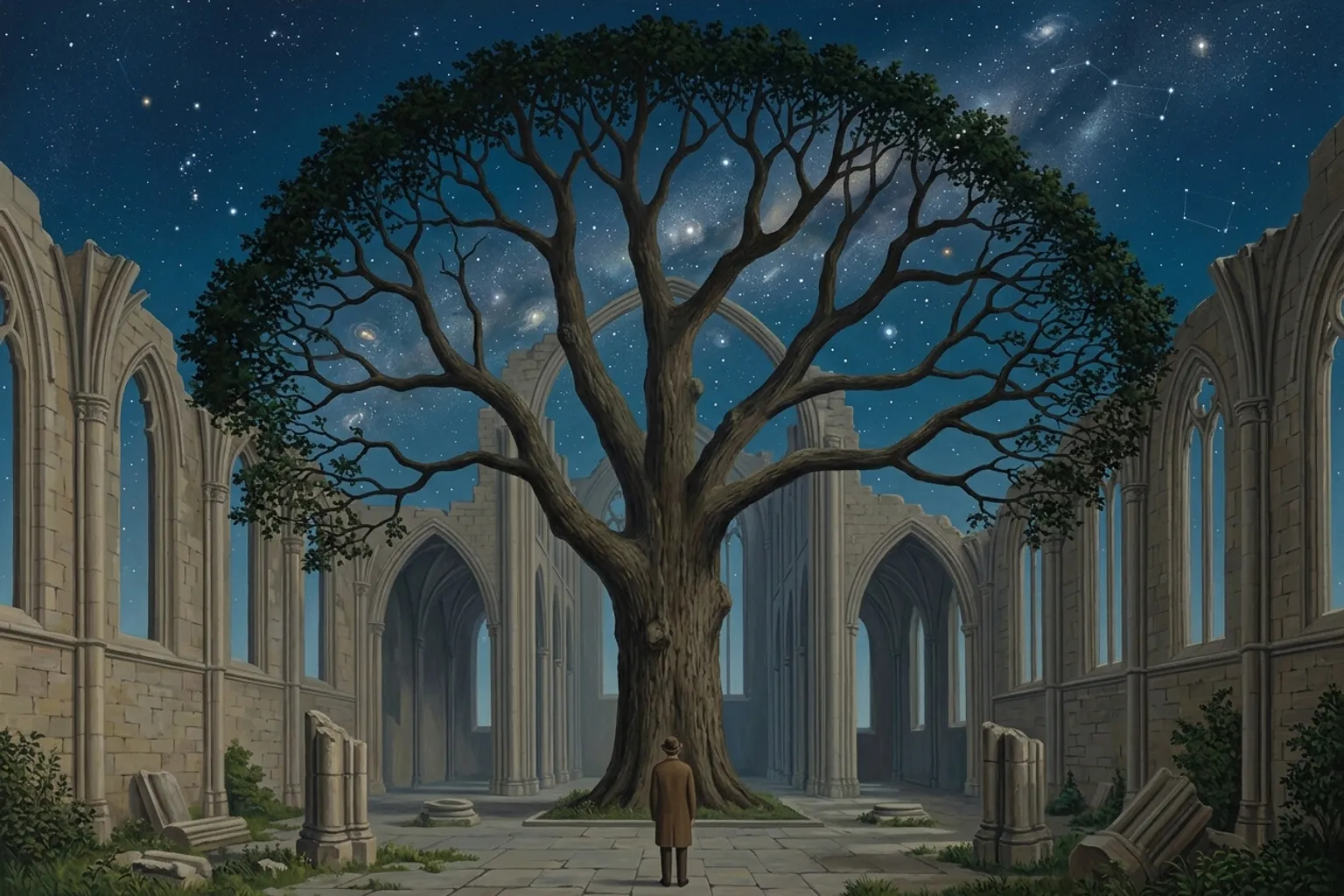
Awe marks the numinous dream: a cathedral-sized space, a cosmic sky, an animal that looks back. These dreams tend to stay with people for years and often coincide with a widening of perspective in waking life.
Awe dreams are the ones people remember for decades. A cathedral-sized space. A sky full of more stars than there are. An ocean with something enormous moving in it. An animal that stops and looks back, and in the looking, knows the dreamer. The feeling is not fear and not joy but the self going still before a bigger thing, and it usually leaves the dreamer changed in a way they cannot immediately describe.
Jung called these dreams numinous, borrowing the word for the felt presence of the sacred. They come, he thought, from the deepest layer of the psyche, the part that is not personal, and they tend to arrive at turning points: crises of meaning, illness, mid-life, bereavement, the beginning or the end of a faith. The awe is the ego meeting something larger than itself and, for once, not arguing.
Awe dreams are not messages in the usual sense; they resist the question of what they mean. Their function is closer to recalibration. Waking life narrows the sense of scale to the next task and the next worry, and the awe dream restores the wider view. People who have them often report, in the months after, that their priorities have quietly reordered, without any decision having been made.
The image of vastness says what the dreamer is being shown. A great space, a hall, a canyon, a cathedral, is the size of the inner life, the psyche showing its own dimensions. The sky and the stars are the dreamer's place in something with no edges. The sea, deep and moving, is the unconscious itself. The animal that looks back is the instinctual self, met as an other. Each is a particular kind of largeness.
The question to ask of an awe dream is not what it means but what it did. How did you wake? What has seemed smaller since, and what larger? Awe dreams are rare and they are gifts, and the only real mistake is to explain them away. Write it down, all of it, and let it work.
Dreaming of a vast space or a huge building
The hall too big to see the end of, the cathedral with no ceiling, the canyon, the empty city: these dreams show the dreamer the dimensions of their own inner life, which is much larger than the daily self admits. They tend to come when the dreamer has been living small, or at the start of a widening: a new study, a spiritual opening, a recovery. Notice whether you were alone in the space, and whether it felt empty or full.
Dreaming of the night sky or the stars
A sky with more stars than the waking one, or one that moves, or one that is close enough to touch, is the classic numinous dream. It arrives at moments when the dreamer's place in things is in question: a death, a diagnosis, a birth, a loss of faith or the finding of one. The dream does not answer the question. It changes its scale, which is often the same thing.
Dreaming of an animal that looks at you
The animal that stops, turns, and meets the dreamer's eyes, a deer, a wolf, a whale, a great bird, with an intelligence the dreamer feels seen by, is among the oldest dream images there are. It is the instinctual self, met as another being, and the awe is the meeting. The animal's kind matters less than the look. Ask what it knew about you, and whether you have been listening to that part of yourself.
Waking from a dream that felt like more than a dream
Some dreams arrive with a conviction attached: that this was real, or true, or meant. The feeling is the mark of the numinous, and it is not a claim about the outside world. It is the psyche saying that this one came from deep, and deserves to be treated accordingly. Write it down in full before the day thins it. Do not decide what it means. Notice, over the following weeks, what it changes.
Questions to ask about this dream
The meaning lives in your dream, not on this page. Before reaching for an interpretation, look at how the feeling actually behaved:
- What was the vast thing: a space, a sky, a sea, a creature?
- Were you alone before it, or accompanied?
- Did it see you, or were you only witnessing?
- How did you wake, and how long did the feeling last?
- What has seemed smaller since, and what larger?
- Is your waking life at a turning point, named or unnamed?
How often does your sleep feel this way?
A page like this can only describe awe in general. What matters is your own pattern: how often the feeling comes, what it arrives with, and what was happening in your life on the nights it did. One dream is an anecdote. Thirty tagged dreams are a graph.
Lunar Log is a private, local-first dream journal that tags every dream with how it felt, from this same list of feelings, and charts them over months alongside the people, places and symbols they appear with. It's free on iOS and Android, and open on the web. Get the app.
New to this? Start with how to remember your dreams, or with keeping a dream journal you'll actually use. If a feeling keeps returning in the same dream, read about recurring dreams.