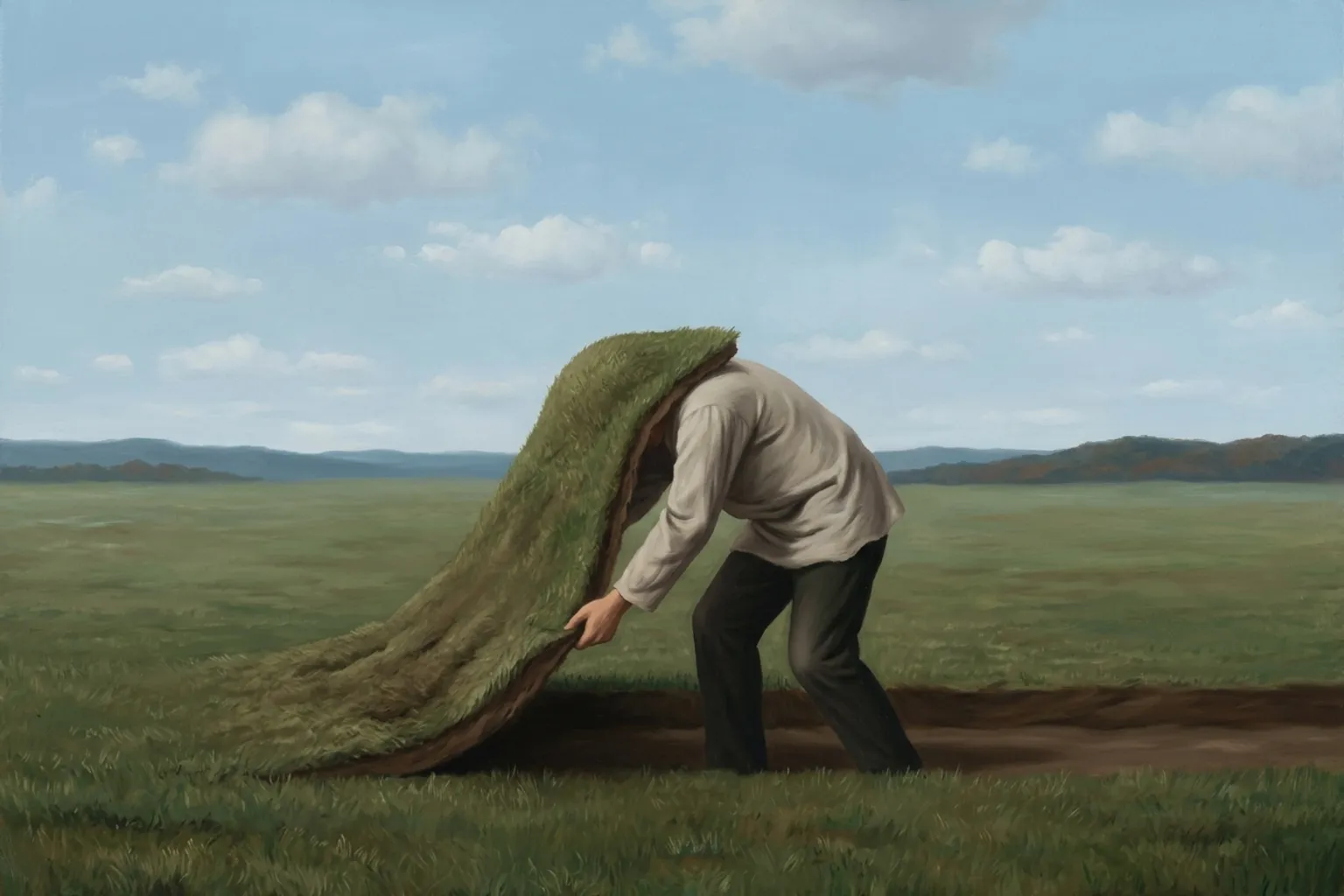
What shame tends to mean in a dream
Naked in public, discovered in a lie, failing in front of everyone: shame dreams dramatize the fear of being seen as you fear you are. They are rarely about the scenario and usually about a standard you are holding yourself to.
Shame dreams are dreams of exposure. You are naked in a crowd. You are on stage with no lines. Your secret is being read aloud. Your body is failing in front of people: teeth crumbling, hair falling, the bathroom with no door. The details vary; the structure is always the same. Something you keep hidden is suddenly visible, and everyone is looking.
Shame differs from guilt in that it attaches to the self rather than to an act. Guilt says I did something bad; shame says I am something bad, or inadequate, or not what I have been pretending to be. That is why shame dreams are so still. There is nothing to do, no crime to conceal, only the fact of being seen. The dreamer typically stands frozen while the dream's audience looks on, and the audience's reaction is the dream's most telling feature.
Jung's concept of the persona, the face we compose for the world, is the key to these dreams. Everyone has one; it is necessary and not dishonest. But when the persona grows too far from the person behind it, the dream strips it off. Nakedness in dreams is the persona removed. The body exposed is the real self, the one that does not have the qualifications or the composure or the certainty the persona advertises. The dream is not humiliating you for sport. It is asking whether the gap has become too wide to sustain.
Watch what the onlookers do. In a surprising number of nakedness dreams, nobody minds. The crowd goes on with its business, or does not notice at all, and only the dreamer is mortified. That is the dream gently pointing out that the exposure you fear would be less catastrophic than you think. When the crowd laughs or jeers, the dream is closer to a fear of a specific judgement, and it is worth asking whose.
Shame dreams spike when we step into a new role: a first job, a promotion, a new relationship, becoming a parent. The persona has not caught up with the position, and the dream says so. They tend to fade as the role becomes genuinely yours. If they persist for years in the same form, the shame is probably older than the role and belongs to an earlier scene of being found wanting.
Dreaming you're naked in public
The archetypal shame dream. Its meaning lies in the mismatch between how exposed you feel and how the crowd reacts. If they do not care, the dream is reassuring you, in its way: the thing you are hiding is less visible, and less damning, than you believe. If they stare or laugh, the dream is picturing a specific fear of judgement, usually in a setting (work, family, a social circle) the dream's location will identify. Either way, ask what you are currently afraid people will see.
Dreaming that your teeth are falling out
Teeth dreams are fear dreams for some people and shame dreams for most. The teeth go in front of others, or you must hide your mouth, and the feeling is of a public failing of the face you show the world. These dreams gather around concerns about appearance, age, competence and the ability to speak up. They are among the most common dreams in every culture that has been surveyed.
Being laughed at or humiliated in a dream
Dreams of open ridicule are unusually painful and often call up a real memory, sometimes from very early. The crowd in the dream frequently has one recognisable face in it, and that face is the key. It may be the person whose judgement you still carry, or a current figure who has taken on that old role. The dream is putting you back in the original scene to show you that the present fear has a history.
Dreaming of a secret being exposed
Your diary is being read, your search history projected, your private self narrated to a room. Exposure-of-a-secret dreams do not require an actual secret; they turn up whenever the distance between the inner and outer self feels unsafe. They are frequent in people who mask a lot: who manage an image at work, who have not come out about something, who are privately struggling while publicly fine. The dream is the pressure of the gap.
Questions to ask about this dream
The meaning lives in your dream, not on this page. Before reaching for an interpretation, look at how the feeling actually behaved:
- What, exactly, was exposed: your body, a secret, a failing, a lack?
- Who was watching, and how did they react: laughter, indifference, kindness?
- Did you try to cover up, run, or simply stand there?
- Have you recently stepped into a role you do not yet feel you have earned?
- Whose judgement do you carry most: is that person, or someone like them, in the dream?
- What would happen, really, if the thing the dream exposed were known?
How often does your sleep feel this way?
A page like this can only describe shame in general. What matters is your own pattern: how often the feeling comes, what it arrives with, and what was happening in your life on the nights it did. One dream is an anecdote. Thirty tagged dreams are a graph.
Lunar Log is a private, local-first dream journal that tags every dream with how it felt, from this same list of feelings, and charts them over months alongside the people, places and symbols they appear with. It's free on iOS and Android, and open on the web. Get the app.
New to this? Start with how to remember your dreams, or with keeping a dream journal you'll actually use. If a feeling keeps returning in the same dream, read about recurring dreams.